
 Image 1 of 1
Zulu Warrior
Overview
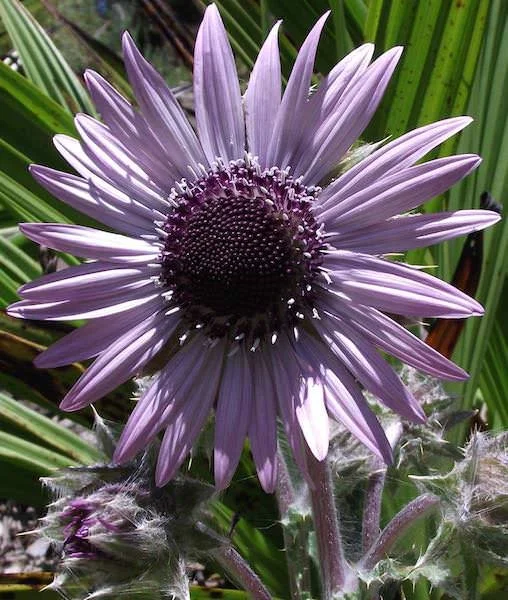
Berkheya purpurea 'Zulu Warrior', also known as the Purple Berkheya or African Thistle, is a striking, architectural perennial native to South Africa. It is prized for its dramatic, thistle-like appearance and its ability to withstand harsh, dry conditions. 'Zulu Warrior' stands out with its basal rosettes of spiny foliage and tall, armored stems that bear unique, smoky-lavender to silvery-mauve daisy-like blooms. It is an excellent choice for gardeners looking to add a touch of "primitive" or exotic flair to a water-wise landscape.
Plant characteristics
Mature size: 2 to 3 feet in height; 1.5 to 2 feet in spread.
Flower: Large, 3-inch daisy-shaped blooms in a pale lavender or dusky mauve with deep purple to chocolate-colored centers.
Foliage: Deep green, oblong leaves with prickly, spined margins; the undersides are covered in a silvery, woolly webbing.
Hardiness: USDA zones 6–10; surprisingly hardy for a South African native, provided it remains dry in winter.
Light requirements
Full Sun is mandatory. This plant is adapted to open grasslands and rocky slopes; it requires maximum light to maintain its upright structure and to prevent the spiny stems from leaning or becoming weak.
Water requirements
'Zulu Warrior' is highly drought-tolerant once established. It requires "medium" to low water use—typically about an inch of water per week during the growing season. It is vital to reduce watering significantly in the winter to prevent the crown from rotting.
Soil and drainage
Requires sharp, excellent drainage. It thrives in average to rich, loamy, or sandy soils, but it will not tolerate "wet feet." Planting on a slope, in a rock garden, or in a raised bed is highly recommended to ensure water moves away from the deep taproot.
Fertilizer
Generally low-maintenance regarding nutrients. Mix in a few inches of compost or an organic granular fertilizer in late spring. Avoid high-nitrogen fertilizers, which can result in excessive foliage that is less prickly and more prone to flopping.
Maintenance and pruning
The most important maintenance task is winter protection from moisture. In colder zones, a gravel mulch around the crown can help keep the plant dry. Deadheading the spent flower stalks can encourage a longer bloom period, but wear thick gloves—the entire plant, including the flower stalks, is "armored" with sharp spines.
Uses and design notes
Because of its distinct, spiky silhouette, 'Zulu Warrior' is a natural fit for rock gardens, gravel gardens, and xeriscaping. It provides a wonderful textural contrast when planted alongside ornamental grasses or softening perennials like Nepeta (Catmint). It is also a superb fresh-cut flower, though the stems must be handled with care.
Summary
Berkheya 'Zulu Warrior' is a rugged, deep-rooted perennial that offers a rare combination of thistle-like toughness and sophisticated, smoky-lavender beauty. It is the perfect "architectural" plant for sunny, well-drained spots where other more delicate flowers might struggle.
NOTE: Available for pickup after 5/15
Overview
Berkheya purpurea 'Zulu Warrior', also known as the Purple Berkheya or African Thistle, is a striking, architectural perennial native to South Africa. It is prized for its dramatic, thistle-like appearance and its ability to withstand harsh, dry conditions. 'Zulu Warrior' stands out with its basal rosettes of spiny foliage and tall, armored stems that bear unique, smoky-lavender to silvery-mauve daisy-like blooms. It is an excellent choice for gardeners looking to add a touch of "primitive" or exotic flair to a water-wise landscape.
Plant characteristics
Mature size: 2 to 3 feet in height; 1.5 to 2 feet in spread.
Flower: Large, 3-inch daisy-shaped blooms in a pale lavender or dusky mauve with deep purple to chocolate-colored centers.
Foliage: Deep green, oblong leaves with prickly, spined margins; the undersides are covered in a silvery, woolly webbing.
Hardiness: USDA zones 6–10; surprisingly hardy for a South African native, provided it remains dry in winter.
Light requirements
Full Sun is mandatory. This plant is adapted to open grasslands and rocky slopes; it requires maximum light to maintain its upright structure and to prevent the spiny stems from leaning or becoming weak.
Water requirements
'Zulu Warrior' is highly drought-tolerant once established. It requires "medium" to low water use—typically about an inch of water per week during the growing season. It is vital to reduce watering significantly in the winter to prevent the crown from rotting.
Soil and drainage
Requires sharp, excellent drainage. It thrives in average to rich, loamy, or sandy soils, but it will not tolerate "wet feet." Planting on a slope, in a rock garden, or in a raised bed is highly recommended to ensure water moves away from the deep taproot.
Fertilizer
Generally low-maintenance regarding nutrients. Mix in a few inches of compost or an organic granular fertilizer in late spring. Avoid high-nitrogen fertilizers, which can result in excessive foliage that is less prickly and more prone to flopping.
Maintenance and pruning
The most important maintenance task is winter protection from moisture. In colder zones, a gravel mulch around the crown can help keep the plant dry. Deadheading the spent flower stalks can encourage a longer bloom period, but wear thick gloves—the entire plant, including the flower stalks, is "armored" with sharp spines.
Uses and design notes
Because of its distinct, spiky silhouette, 'Zulu Warrior' is a natural fit for rock gardens, gravel gardens, and xeriscaping. It provides a wonderful textural contrast when planted alongside ornamental grasses or softening perennials like Nepeta (Catmint). It is also a superb fresh-cut flower, though the stems must be handled with care.
Summary
Berkheya 'Zulu Warrior' is a rugged, deep-rooted perennial that offers a rare combination of thistle-like toughness and sophisticated, smoky-lavender beauty. It is the perfect "architectural" plant for sunny, well-drained spots where other more delicate flowers might struggle.
NOTE: Available for pickup after 5/15