
 Image 1 of 1
Snapdragon - Cherry Twist
Cherry Twist
Snapdragon ‘Cherry Twist’
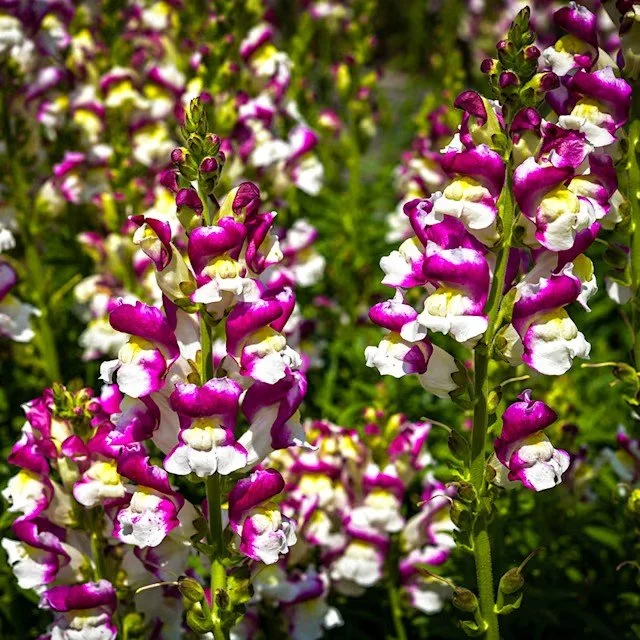
Snapdragon ‘Cherry Twist’ is a compact, vigorous variety prized for its abundant, bi-colored blooms that blend deep cherry red with creamy pink or white edges. Plants form neat, bushy mounds 12–18 inches tall and 12–16 inches wide, making this cultivar well suited to borders, containers, and mixed beds. Flowers are borne on sturdy spikes from late spring into fall when deadheaded regularly, attracting pollinators and adding long-lasting color to the garden.
Characteristics
Flower color: Cherry red with lighter pink/cream edges; bi-colored, ruffled blooms
Habit: Compact, bushy, well-branched; 12–18 inches tall, 12–16 inches wide
Bloom time: Late spring through fall (prolonged with deadheading and cooler temperatures)
Hardiness: Typically grown as a tender perennial in warm climates or as an annual in most regions; USDA zones vary by cultivar—commonly treated as an annual in zones cooler than 9
Foliage: Narrow, lance-shaped green leaves that remain attractive throughout the season
Use: Borders, edging, rock gardens, containers, cutting gardens
Wildlife: Attractive to bees and butterflies; blooms make good fresh-cut or dried flowers
Growing Instructions Site and soil
Light: Full sun for best flowering; tolerates light afternoon shade in hotter climates.
Soil: Well-draining, moderately fertile soil with good organic matter. Avoid heavy, waterlogged soils.
pH: Prefers neutral to slightly acidic (about 6.0–7.0).
Watering and feeding
Water: Keep soil evenly moist while establishing. Once established, water when the top inch of soil dries. Avoid overhead watering late in the day to reduce disease risk.
Fertilizer: Apply a balanced, slow-release fertilizer at planting. Feed lightly every 4–6 weeks with a balanced liquid fertilizer during the growing season if plants show slow growth or reduced flowering.
Maintenance
Deadheading: Remove spent flower spikes regularly to encourage continuous blooming and a tidy habit.
Pinching: Pinch back young plants once or twice to promote bushiness and more flower spikes.
Pest and disease control: Watch for common issues such as aphids, thrips, slugs, and fungal diseases (e.g., rust, powdery mildew). Ensure good air circulation, avoid overhead watering, and treat pests promptly with appropriate controls.
Winter care: In frost-free areas, mulch lightly and treat as a perennial. In colder regions, snapdragons are usually grown as annuals; collect seed if you wish to save the variety.
Cut flowers
Cut stems in the morning when blooms are fresh. Place stems in water immediately; change water every few days for longer vase life. Removing lower leaves before placing in the vase helps keep water clean.
Notes
Performance can vary with climate: snapdragons prefer cooler weather and may slow or stop flowering in extreme summer heat. For continuous color, plant in succession or provide some afternoon shade in hot regions.
If you’re saving seed, allow a few flower spikes to mature and dry on the plant; collect seeds before they disperse.
House of Roots Nursery recommends planting Snapdragon ‘Cherry Twist’ where you can easily deadhead and enjoy both garden color and pollinator visits.
NOTE: Available for pickup after 5/15
Cherry Twist
Snapdragon ‘Cherry Twist’
Snapdragon ‘Cherry Twist’ is a compact, vigorous variety prized for its abundant, bi-colored blooms that blend deep cherry red with creamy pink or white edges. Plants form neat, bushy mounds 12–18 inches tall and 12–16 inches wide, making this cultivar well suited to borders, containers, and mixed beds. Flowers are borne on sturdy spikes from late spring into fall when deadheaded regularly, attracting pollinators and adding long-lasting color to the garden.
Characteristics
Flower color: Cherry red with lighter pink/cream edges; bi-colored, ruffled blooms
Habit: Compact, bushy, well-branched; 12–18 inches tall, 12–16 inches wide
Bloom time: Late spring through fall (prolonged with deadheading and cooler temperatures)
Hardiness: Typically grown as a tender perennial in warm climates or as an annual in most regions; USDA zones vary by cultivar—commonly treated as an annual in zones cooler than 9
Foliage: Narrow, lance-shaped green leaves that remain attractive throughout the season
Use: Borders, edging, rock gardens, containers, cutting gardens
Wildlife: Attractive to bees and butterflies; blooms make good fresh-cut or dried flowers
Growing Instructions Site and soil
Light: Full sun for best flowering; tolerates light afternoon shade in hotter climates.
Soil: Well-draining, moderately fertile soil with good organic matter. Avoid heavy, waterlogged soils.
pH: Prefers neutral to slightly acidic (about 6.0–7.0).
Watering and feeding
Water: Keep soil evenly moist while establishing. Once established, water when the top inch of soil dries. Avoid overhead watering late in the day to reduce disease risk.
Fertilizer: Apply a balanced, slow-release fertilizer at planting. Feed lightly every 4–6 weeks with a balanced liquid fertilizer during the growing season if plants show slow growth or reduced flowering.
Maintenance
Deadheading: Remove spent flower spikes regularly to encourage continuous blooming and a tidy habit.
Pinching: Pinch back young plants once or twice to promote bushiness and more flower spikes.
Pest and disease control: Watch for common issues such as aphids, thrips, slugs, and fungal diseases (e.g., rust, powdery mildew). Ensure good air circulation, avoid overhead watering, and treat pests promptly with appropriate controls.
Winter care: In frost-free areas, mulch lightly and treat as a perennial. In colder regions, snapdragons are usually grown as annuals; collect seed if you wish to save the variety.
Cut flowers
Cut stems in the morning when blooms are fresh. Place stems in water immediately; change water every few days for longer vase life. Removing lower leaves before placing in the vase helps keep water clean.
Notes
Performance can vary with climate: snapdragons prefer cooler weather and may slow or stop flowering in extreme summer heat. For continuous color, plant in succession or provide some afternoon shade in hot regions.
If you’re saving seed, allow a few flower spikes to mature and dry on the plant; collect seeds before they disperse.
House of Roots Nursery recommends planting Snapdragon ‘Cherry Twist’ where you can easily deadhead and enjoy both garden color and pollinator visits.
NOTE: Available for pickup after 5/15